 Fix Your Life
The Stoics were the original daily journalers
Marcus Aurelius ruled an empire, and still ended his days writing private notes to himself: the book we now call Meditations was never meant for readers. Seneca described putting himself on trial each night: examining the whole day and hiding nothing from himself. Epictetus told students to keep their principles "at hand": procheiron; ready before events demanded them.
Strip away twenty centuries and the practice is startlingly simple: a morning preparation, an evening review, and honest written answers. No incense, no hour of silence. Questions, on a schedule.
Morning questions: prepare the day
- What is in my control today, and what am I pretending is?
- What obstacle is likely today, and how will I meet it?
- If today were my last, would I spend it as I'm about to?
- What would the person I'm trying to become do before noon?
Evening questions: put the day on trial
- What did I do well today? Where did I act against my values?
- What upset me today that was never in my control?
- What bad habit did I feed today, and what did I curb?
- What am I avoiding that I know I should face?
The Stoic question isn't meant to be contemplated. It's meant to be answered; briefly, honestly, today.
Why the practice dies without a schedule
Here's what the philosophy books skip: Marcus Aurelius had the discipline of a Roman military camp structuring his hours. You have a phone with forty apps engineered against your attention. Reading stoic quotes between distractions isn't a practice: it's decoration. The practice is the appointment: fixed times when the question arrives and demands an answer, whether you feel philosophical or not.
How to run a stoic practice with Fix Your Life
Fix Your Life turns your phone into the discipline Marcus had:
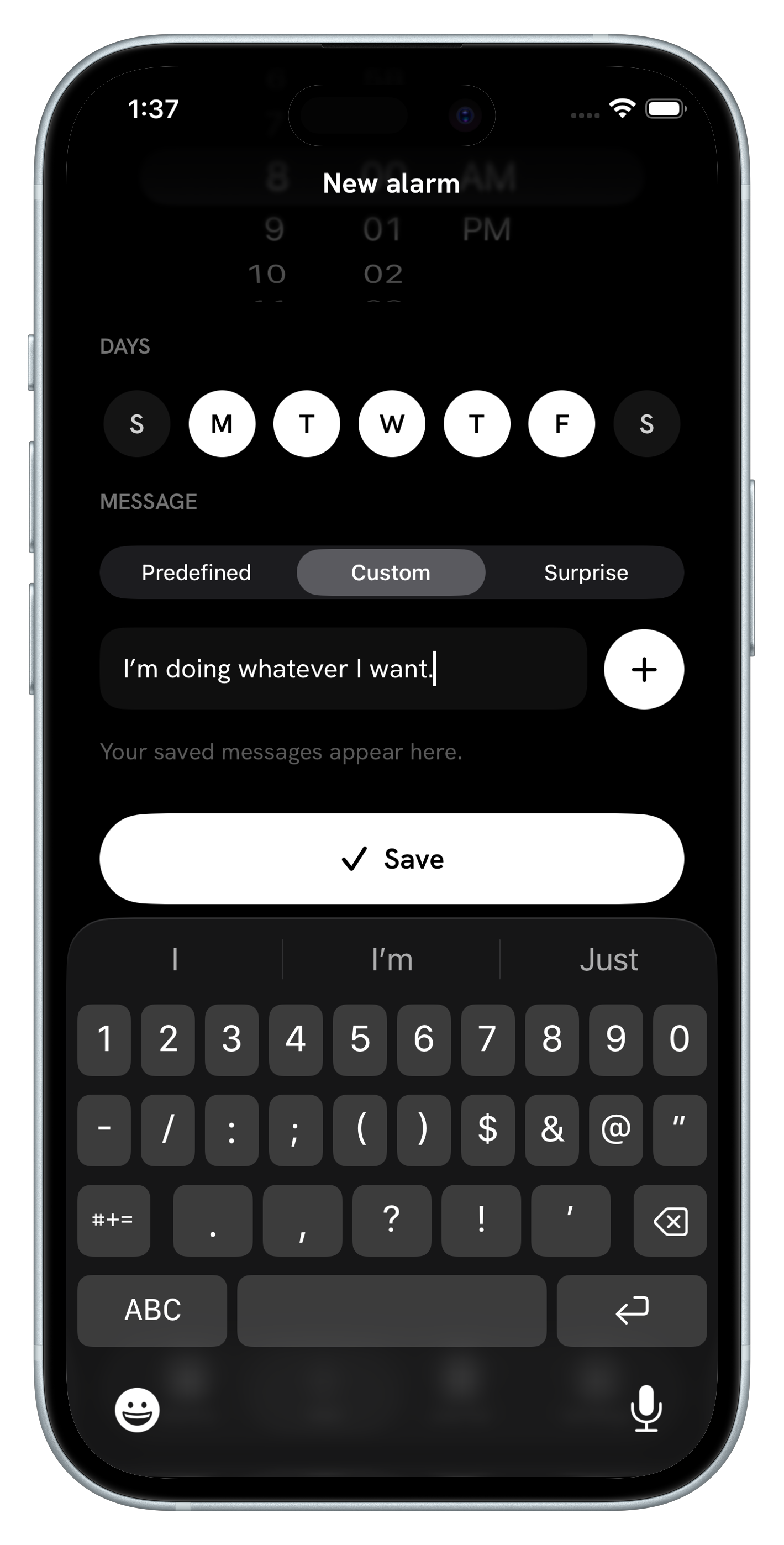
- Set two alarms: a morning preparation (e.g., 7:00) and an evening review (e.g., 21:30). They ring until you face them.
- Write your own stoic questions as custom messages: the ones above, or your own translations of them. Save as many as you like.
- Turn on Surprise mode to draw a different question from your set each day, like opening Meditations at random.
- Answer in one line. Your Journal becomes your own private Meditations: dated, searchable, and yours alone. The streak and heatmap keep the discipline honest.
Questions people also ask
What questions did the Stoics ask themselves?
In the morning they prepared for the day, asking what is in their control and what obstacles might come. At night they reviewed it, asking what they did well and where they acted against their values.
How do I start a daily stoic practice?
Set two fixed moments, a morning preparation and an evening review, and answer one question in writing each time. The schedule is the practice; reading quotes is not.
Did Marcus Aurelius keep a journal?
Yes. Meditations was a set of private notes he wrote to himself and never meant for readers.
Start your own Meditations tonight.
Free to download · 3-day free trial · No ads. Ever.
Download Fix Your Life