 Guardian Reader
There are four common causes. They need different responses, and getting the diagnosis wrong is why so much well-meant encouragement goes nowhere.

1. It is too hard
The most common cause and the least likely to be said out loud, because admitting it feels like admitting to being stupid. If reading takes so much effort that the story never arrives, of course it is boring: for that child, there is no story, only work.
Signs: avoiding reading aloud specifically, finger tracking well past the age it is expected, guessing words from the first letters, fatigue after a couple of minutes.
What helps: drop the difficulty a level or two, even if it feels like going backwards. Fluency is built on texts a child can mostly handle. Short daily sessions out loud rebuild it faster than long silent ones.
2. They have no say in what they read
A book assigned by an adult is homework. A book chosen by the child is theirs. The difference in willingness is enormous and costs nothing to give away.
What helps: widen what counts. Comics, graphic novels, non-fiction about one narrow obsession, joke books, game guides. The decoding practice is identical, and interest is the only fuel available.
3. There is no time when reading is the obvious thing
Reading rarely wins an open competition against a screen at 8pm. Not because the child prefers screens in some deep way, but because the screen requires no decision.
What helps: a fixed slot, always at the same time, short enough to be unarguable. Ten minutes before lights out, or straight after dinner. Protecting the slot matters more than its length.
4. Reading has no purpose they can feel
Adults read for pleasure, but pleasure takes fluency to unlock. Before that point, a child needs a reason that exists today, not a promise about doing better at school later.
What helps: a visible, immediate consequence. Ten minutes of reading unlocks the game. A streak that must not break. A medal at seven days. It is not bribery, it is a bridge, and it stops mattering once the reading itself becomes rewarding.
When it might be more than reluctance
If a child consistently reverses letters well past age seven, cannot reliably sound out simple unfamiliar words, has trouble with rhyme, or reads a word correctly on one line and not on the next, it is worth raising with their teacher and asking about a screening for dyslexia.
Reluctance and difficulty look identical from the outside, and the difference matters. This article is not a substitute for that assessment.
Making the purpose immediate
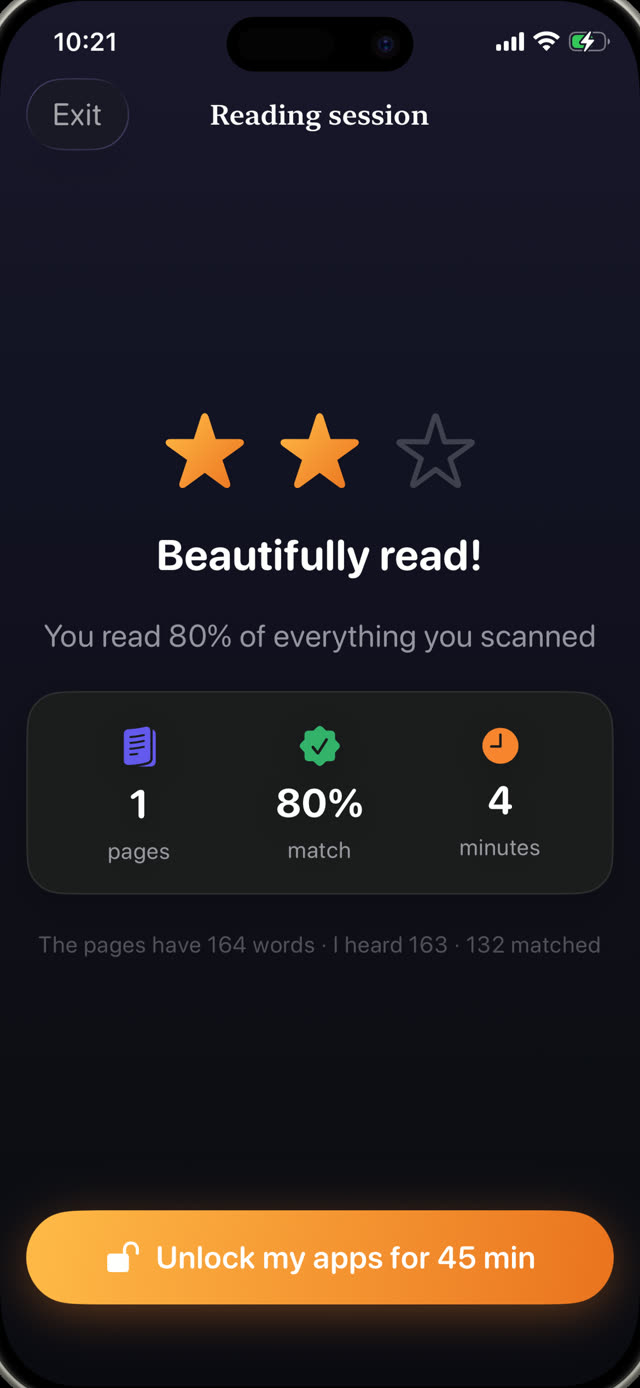
Guardian Reader is aimed squarely at causes three and four. It creates the fixed slot, because the reading has to happen before the apps open, and it makes the purpose immediate, because the screen time arrives the moment the reading is done.
Because the app adjusts the pass mark to the age you select, a struggling reader is not measured against a fluent one. And the daily target can be set as low as a single page, which for a reluctant reader is exactly where to start.
Reading unlocks the screen.
Free to download · No accounts, no tracking
Get Guardian Reader for iPhone