 Block&Read
The lifecycle of every app blocker
Day one: motivated, you block everything. Day three: you hit the block screen, sigh, and wait out the timer. Day five: you discover the "ignore for today" button. Day eight: the blocker is gone, and Instagram has a new session-length record.
This isn't a willpower story. It's an engineering story. Most blockers are built on pure restriction — they take away the slot machine and leave you holding nothing. But the urge that made you reach for the phone hasn't gone anywhere. Restriction creates a void, and a void loses to boredom one hundred percent of the time.
Two design flaws, one root cause
- The exit is always cheaper than the wall. Timers, "just 5 more minutes" buttons, disable toggles — every blocker ships an escape hatch, and your brain finds it by day four. Once you've used it twice, the block screen becomes a two-tap speed bump.
- Nothing fills the moment. You reached for your phone because you had thirty restless seconds. The block screen says "no" and hands the thirty seconds back, still empty. Guess where they go.
A bad habit is almost impossible to remove. It is surprisingly easy to redirect.
Replacement beats restriction
Habit research keeps arriving at the same conclusion: you don't break a loop by deleting the reward — you break it by swapping the reward while keeping the trigger. The reach-for-the-phone gesture is the most rehearsed movement of your day. That's not the enemy. That's free real estate.
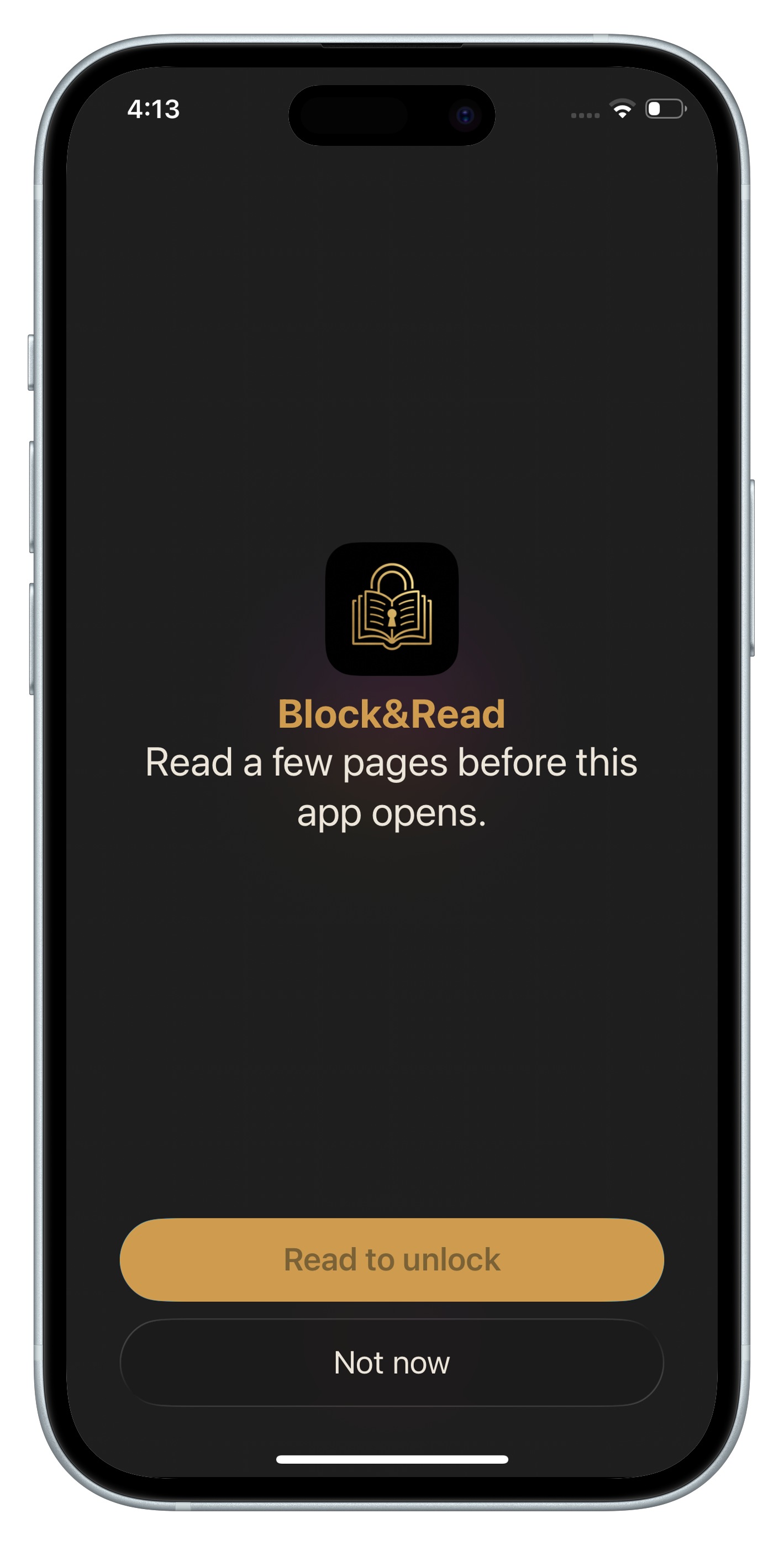
That's the mechanic behind read-to-unlock: when you open a blocked app, you get a book instead of a wall. The restless thirty seconds get filled — with a page. Read to your daily goal and the apps open. The urge did the work; the void never appears. And because the "toll" is genuinely pleasant, the system doesn't build resentment the way naked blocking does.
What to look for in a blocker that sticks
- A replacement, not just a wall. The block moment should hand you something to do, not a countdown to stare at.
- A real cost to bypass. If there's an escape hatch, it should cost more than the toll itself — otherwise you'll take it.
- A daily unit you can always afford. Five pages works on your worst day. "One hour of focus" doesn't.
- Progress you can see. Streaks and stats convert avoided scrolling into something you own and protect.
How Block&Read implements this
Block&Read is a replacement-first blocker:
- Read to unlock: tap a blocked app and your current book opens at your exact page. Hit your daily goal — even a page or two — and every blocked app unlocks.
- Strict Mode: the escape hatch, removed. No "not now" that works, no timer to wait out. The only way through is the pages.
- Streaks & stats: pages read, time won back, books finished, apps blocked — the reward loop that keeps the system alive after week one.
- Free to start: block two apps and read from the classics shelf at no cost; Premium unlocks unlimited apps and schedules.
Try the blocker you won't uninstall.
Free to download · No ads, no accounts, no tracking
Get Block&Read